
Tom Kha Soup, Explained: Thailand's Coconut Classic
August 18, 2026 · 5 min read
Ask a first-time guest what they remember about a great Thai meal, and the answer is often a bowl of tom kha soup. Creamy but bright, rich but never heavy, this Thai coconut soup has become one of the most searched-for dishes in Atlanta, and one of the most misunderstood. Many versions around town are little more than coconut milk with a squeeze of lime.
The real thing is far more interesting. Here is what goes into an authentic bowl, how it differs from tom yum, and why our Tom Kha Kung has become a signature at Nan Thai Fine Dining in Midtown.
What Does "Tom Kha" Actually Mean?
The name is a recipe in miniature. In Thai, "tom" means to boil, and "kha" is galangal, the knobby rhizome that gives the soup its signature aroma. So tom kha is, literally, galangal boiled in broth. Coconut milk, lemongrass, and makrut lime leaves round out the base, but galangal is the soul of the dish.
Galangal looks like ginger and is often mislabeled as such, but the flavor is completely different: piney, citrusy, almost peppery, with none of ginger's sweetness. A tom kha made with ginger instead of galangal is the first sign a kitchen is cutting corners. It is also why the best versions of this soup cannot be faked with a paste from a jar.
What Goes Into an Authentic Tom Kha Soup?
A proper tom kha soup is a balancing act between five elements:
- Coconut milk for body and gentle sweetness
- Galangal for that unmistakable aromatic backbone
- Lemongrass and makrut lime leaves for fragrance
- Lime juice and fish sauce for brightness and depth
- Thai chilies for a warmth that seasons rather than scorches
The technique matters as much as the ingredient list. The aromatics need time to infuse the coconut broth, but boil it too hard and the coconut milk splits. Add the lime juice too early and the brightness cooks away. When it all comes together, no single flavor wins. That balance of sweet, sour, salty, and hot in one spoonful is the reason Thai cooking is famous worldwide.
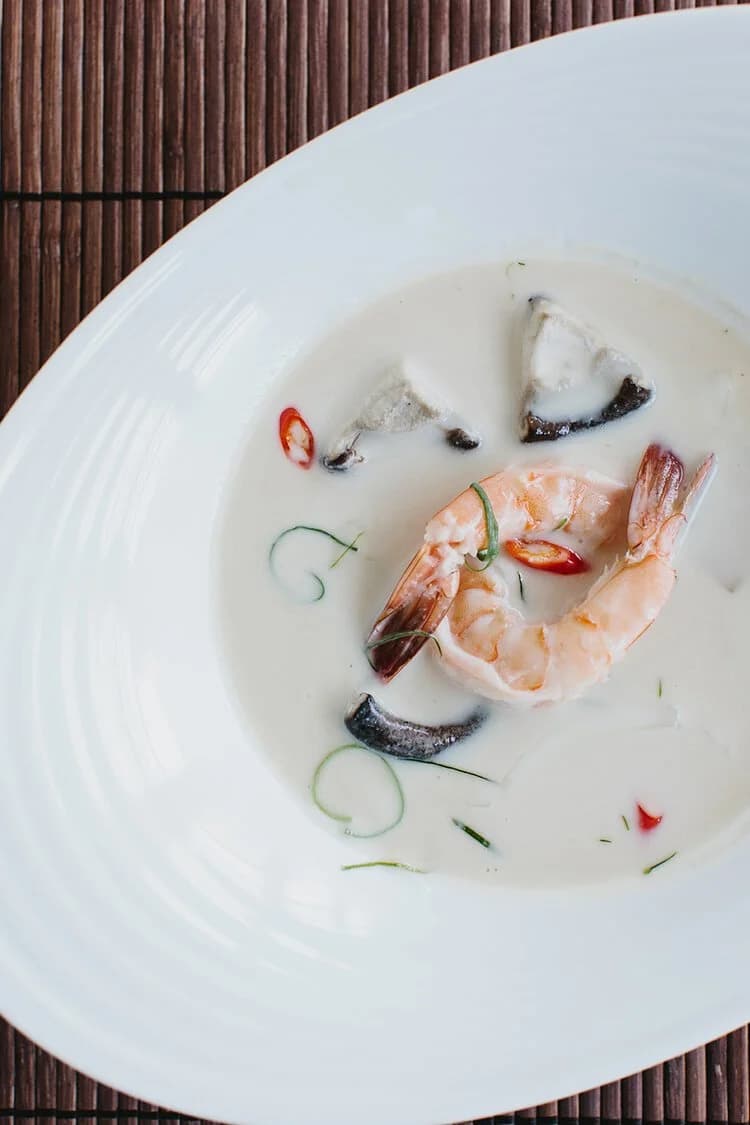
At our Midtown kitchen, the Tom Kha Kung on our menu is a galangal-infused coconut soup with tiger prawns, young coconut meat, and assorted mushrooms. The young coconut is a detail most restaurants skip: soft ribbons of fresh coconut flesh that echo the broth and give each spoonful a silky texture.
Tom Kha vs. Tom Yum: What Is the Difference?
The two most famous Thai soups are cousins, not twins. Both start with lemongrass, galangal, and lime, but they part ways at the broth.
Tom yum is a clear, hot and sour lemongrass broth, sharp and racy, usually stained red with chili oil. Tom kha adds coconut milk, which softens the acidity and mellows the heat into something rounder and more comforting. If tom yum is a bolt of lightning, tom kha is candlelight.
You do not have to choose in theory alone. Alongside the Tom Kha Kung, our soup list includes Tom Yum Talay, a lemongrass broth loaded with shrimp, scallops, calamari, and a mushroom medley. Ordering both for the table and comparing them spoonful for spoonful is one of the best crash courses in Thai flavor you can get in Atlanta.
Tom Kha Gai, Tom Kha Kung, and Other Variations
If you have seen tom kha gai on menus around town, the last word simply tells you the protein. "Gai" is chicken, the most common version in Thailand and the one most Americans meet first. "Kung" means prawns or shrimp, which is how we serve it: the sweetness of the prawns plays beautifully against the herbal broth.
Vegetable and tofu versions exist as well, and mushrooms are welcome in nearly every variation because they soak up the broth like little sponges. Whatever the protein, the test of the bowl is the same: can you taste the galangal, and does the coconut carry the flavors without smothering them?
How to Eat Tom Kha the Thai Way
In Thailand, soup is rarely a solo first course. It sits in the middle of the table alongside curries, salads, and stir-fries, and diners return to it between bites as a palate refresher. Steamed jasmine rice is the traditional partner; a spoonful of broth over rice is one of life's quiet pleasures.
At dinner, we see guests enjoy it both ways. Some start with a bowl to wake up the palate before a Panang curry or our whole snapper. Others treat it as the anchor of a lighter meal with a salad such as Som Tum Kung. There is no wrong answer, though we suggest tasting the broth on its own before adding rice, at least for the first few spoonfuls.
If you are building a full spread, our guide to the best Thai food in Atlanta walks through seven dishes that pair naturally with a bowl of tom kha.
Where to Try Tom Kha in Atlanta
Plenty of spots in the city ladle out a decent coconut soup. What sets ours apart is the standard behind it. Chef Nan Niyomkul built her reputation on palace-style Thai cooking, the kind that earned this restaurant 16 AAA Four-Diamond awards and made her the first woman to cook the Champions Dinner at The Masters. Her tom kha is not an appetizer to rush through. It is a thesis statement.
You will find us at 1350 Spring Street NW in Midtown Atlanta, an easy stop before a show or after a day at the office. We serve lunch Monday through Friday and dinner Monday through Saturday. Groups celebrating something bigger can book our private dining room, where the soup course has opened many a rehearsal dinner and corporate gathering.
Taste It for Yourself
Reading about galangal and coconut broth only gets you so far. The fastest way to understand why tom kha soup inspires such devotion is to sit down with a steaming bowl of Tom Kha Kung and taste the balance for yourself. Reserve a table at Nan Thai Fine Dining, and start your meal the way Bangkok does.
Experience It Yourself
Taste the dishes you just read about at Nan Thai Fine Dining in Midtown Atlanta.
Reserve a TableJoin Us